The Applications Of An Urban Solid Waste Recycling Plant For Waste Disposal

Most people know that the vast majority of recyclable products and up in the trash. There is not a lot of motivation on the part of people that are producing these waste products to actually do their part in recycling them. Even though companies will provide containers for free where plastic, cardboard, and various forms of metal can be placed in order to be recycled, there is no monetary value for people to do so, prompting many people to simply bypass recycling altogether and throw everything into the trashcan. That’s why an solid waste treatment plants or waste disposal is a great idea for any small or large community. The speed at which landfills are filling up has prompted the creation of waste sorting machines suppliers. Let’s look at the applications of an urban solid waste recycling plant for waste disposal to show you the benefits that it can provide and how profitable.
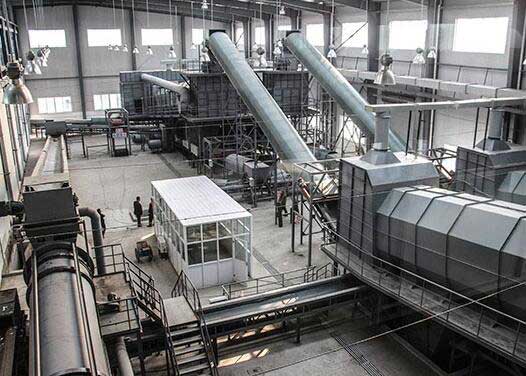
municipal-solid-waste-recycling-plant

How Does A Solid Garbage Recycling Machine Work?

These factories are designed with a series of conveyors in which the different types of wastes material can be separated. They are able to take out plastic containers, cans, bottles, and many other identifiable items that can be recycled. According to some statistics, these factories have been able to help keep as much as 70% of this recyclable waste out of the landfills. They are able to capture high-value commodities, essentially PET plastics, up to 99% of the time on the first pass through the system.
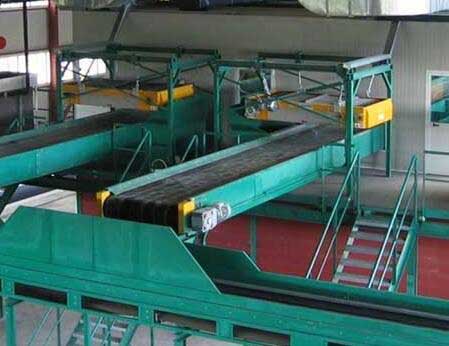
solid-waste-management-price

How These Can Be Profitable

The systems can be profitable for those that own them because of the sheer volume of recyclable products that can be extracted from the waist that people throw out every day. For example, the plastic containers that are extracted can be sold to a pyrolysis facility established by pyrolysis plants manufactures where it can be broken down bio oil and char that can be sold to corporations and farmers, respectively. Or they can be refined into diesel oil and carbon black. The speed at which the waste material can be process will depend upon how high-tech the actual factory is. It may also be manned by people that are watching for items that bypassed the system, making the extraction of recyclable products even more efficient.
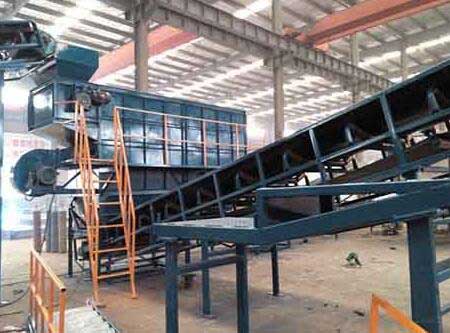
waste-sorting-machine-suppliers

What Are The Applications Of Using These Recycling Plants?

There are three specific applications for benefits to providing this type of service, especially in large urban areas. First of all, the cost of using a landfill will be minimized because less trash will actually be deposited into the ground at these locations. Second, there is profit to be made with all of the recyclable materials that are extracted, whether you are looking at plastic, tyres, cardboard, or aluminum. And the Waste tyres will be recycled by tyres recycling plants sales. Finally, the main application is to simply make our world a better place that is not simply a garbage dump, and by doing so, we can preserve our planet for future generations by recycling everything that we can using the state-of-the-art urban solid waste recycling plant that can help with waste disposal.
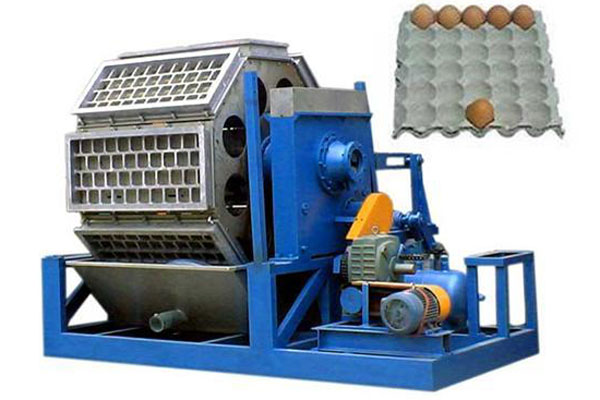
Egg Tray Making Machines

Egg tray machine for sale is a very vital appliance which is mainly used for pulp production .

Properties of an egg tray making machine
The egg tray machine for sale contain a whole set of equipment for adoption of waste paper to be used as a raw material. , pulping is usually done if necessary. The products meets the requirements of stiffness, strengths, safety and stability.

Applications of the egg tray making machine
The main function of the machine is for packaging and protection of commodities. In fact, it is able to accommodate the packing provisions of the supplies. Hence, the products are not damaged in any way.

paper egg tray making machine
Advantages of the egg tray making machine
The egg tray industry normally uses trays or cartons for transportation of the products from the production unit to the market place. When there are no trays, it will be impossible for eggs to be moved from one place to another because of its brittleness. The egg tray making machine produces trays of different sizes.

Another advantage of the machine is that it is very easy to operate and has long life. The drier is also very convenient to transport from one place to another. Moreover, the cost of energy and labor cost is saved.
One of the benefits of the machine is that it the molded products have a positive influence on the environment’s improvement. Nevertheless, the equipment is Eco-friendly and very easy to operate. All types of written materials, waste newspapers are utilized by the machine for making the egg trays. Click here to know more useful information on a small egg tray making machine.


How a egg tray making machine work
As mentioned above, these types of machines are very unique inside their capability as it is able to create different types of cartons and trays. The procedure takes place before making use of the egg tray machines. The following are the major stages in which egg tray making machine works:
· Molding stage
The quality and size of the molds is directly influenced by the pulping process. The egg trays are mainly based on the molds.
· Pulping stage
The raw materials of egg trays are the pulp. The success of the pulps depends directly on the thickness.
· Molding stage
This is a process which is particularly significant for controlling the suction.
· Drying stage
This is the last stage whereby it involves temperature control. If the temperature is either too high or too low, the machine will not work. You can look at our pulp molding machine for sale.

Full automatic egg tray making machine
Majority of people prefer automatic egg tray making appliances because it has high efficiency. As compared to the manual egg tray making machine, the full automatic is fit for both medium and large industries. The machine also has an automatic drier. After passing through the molding stage, the egg trays are directly conveyed to the automatic drying line.

Conclusion
Paper egg tray making machines are significant in that it is used for manufacturing egg tray products. According to your requirements, you can choose either full automatic or manual paper egg tray making machine. As mentioned above, full automatic egg tray making machine is both efficient and has an automatic drier. Therefore, you can choose the appropriate machine basing on your needs.

25-Metre Tall Timber Construction: The Design Opportunity

We are on the cusp of a major change in Australian construction.
With public comment period now closed, industry insiders report great confidence that the Australian Building Codes Board will adopt a new voluntary deemed-to-satisfy (DTS) solution in the BCA for timber building systems in apartment, hotel and office buildings up to 25 metres in effective height (approximately eight storeys). The proposed solution, consisting of the use of appropriate layers of fire resistant plasterboard and sprinklers, will cover both timber framing and massive timber systems. Timber building systems are currently restricted to three storeys.
So why is this important? When construction costs are projected to escalate at a rate of four per cent per annum in NSW for the remainder of 2015 according to the WT Partnership, that equates to over $13,000 annual construction escalation on a typical two-bedroom, mid-range apartment. I believe any new technology that reduces construction time and hence cost is welcome, as the current building boom continues unabated.
The labour and materials of a structural frame typically accounts for between 13 to 15 per cent of total construction cost, but erection can account for a third or more of the overall construction programme. By the time a structural frame is complete, having bought their land and paid for design and gain approvals, a developer will typically have spent around a third of total project hard costs. So as the S-curve of construction costs exponentially increases once the frame is up, so too does the sum of finance costs, holding and equity opportunity costs. At this point in a construction programme, savings in erection time capitalise into significant real dollar value for the builders and developers involved.
As housing affordability is being hotly debated in the property industry, much of the discussion seems to get hijacked by various interest groups, often into indirect factors and hobby horse issues – whether that be the planning process or state taxes or negative gearing. For my money, reducing the cost of construction is a surefire and direct way of influencing property cost outcomes. There are proven ways to do this on appropriate projects if builders are prepared to adapt to new technologies.
Many assertions have been made independently and in many countries about the cost and time advantages of timber multi-storey construction over other common construction methods. Mid-rise timber construction regulations have been in place for many years in Europe and the Americas, so their experience is perhaps a guide as to what we should expect here.
That experience is backed by a great deal of supportive academic and industry research. Comparison of construction techniques is a challenge and some research has gone to incredible lengths to prove the timber value proposition.
For instance, an early research feasibility study called the TF2000 Project which was carried out in the UK involved the construction of a full size, six-storey experimental light timber frame building inside an aircraft hanger. It was the first of its kind in the world at the time in 1997. The sole purpose of this was to investigate the performance and economic prospects of medium-rise timber frame buildings for the UK market.
The research made findings on lead time, construction value and speed of construction. The start point was the arrival of the structural frame on site and the end being a watertight timber frame. It took just 17 days to erect a six-storey building of 24 flats with a team of just six erectors. The construction rate was 656 square metres per week compared with a comparable concrete structure of 333 square metres per week.
Granted, the above was set in controlled conditions, but are great results in the UK able to be replicated in Australia? Perhaps the poster project for achievement of time efficiency with timber construction is Australand’s The Green project. This five-level light timber frame construction of GFA of 5,100 square metres went up on an average, 11-day floor cycle using prefabricated Tecbeam cassette floors and load bearing wall frames, saving over 12 per cent on the programme compared with a best case concrete frame alternative.
Cost benefits have been assessed and reported time and again around the world, most recently in this year’s detailed cost comparison of steel, concrete and timber building systems by the Royal Institute of Chartered Surveyors. There are no prizes for guessing that timber was yet again proven to be the lowest cost structural system.
One would think it a foregone conclusion that a cheaper, quicker structural system, with a ready pool of trade labour that can be sourced domestically, as well as commercial trade work force, would be the natural choice of most builders. The fact that the majority of projects for which timber is a suitable alternative – low to mid rise, suburban developments, are still designed in concrete, is a testament to the entrenched work practices and snail’s pace of meaningful innovation in what is still an industrial-age arena. Facts cannot be ignored indefinitely, however, and I am convinced that as the current apartment boom tapers and the design and construction sectors are forced to sharpen their pencils, light timber frame construction in multi-storey projects will increasingly become the preferred system of choice.